

Spring AC Checklist Carlsbad and San Diego Homes
My Guy is Proud to Be "Your Guy" for Your Home
That first warm afternoon can expose every problem your air conditioning hid all winter. For many Carlsbad homes, months of lighter use during the heating season mean that dust, weak airflow, and worn parts often show up on the first real cooling day.
If you live in Carlsbad, Escondido, Vista, or elsewhere in San Diego County, spring is the best time to address these concerns. Following a reliable spring AC checklist Carlsbad residents trust helps your cooling system run faster, keeps your monthly energy bills in check, and ensures you avoid a rushed repair call when summer heat arrives. Start your inspection indoors, then move outside to finish the job.
Key Takeaways
- Change or clean the air filter before starting your first long cooling run of the season.
- Regularly clear debris from around your outdoor condenser unit, which is especially important for maintaining efficiency in coastal areas like Carlsbad and Oceanside.
- Test one full cooling cycle and watch for warm air, odd noises, weak airflow, or water leaks.
- Handle simple DIY maintenance tasks yourself, but leave refrigerant work, electrical wiring, and repeated breaker issues to a licensed HVAC pro to help prevent breakdowns.
Boost Indoor Air Quality by Starting Indoors
Begin with the component you see most often, which is the air filter. In many homes, the same blower that helped with winter heating now handles spring cooling. That means clogged filters from the furnace season can restrict airflow before your AC even gets started. Performing a regular air filter replacement is one of the simplest ways to ensure your system runs smoothly. Pull the filter and hold it up to the light; if you can barely see through it, replace it. Check the size printed on the frame, and install the new one with the airflow arrow pointing the right way.
Next, walk the house and open every supply and return vent. Furniture, rugs, and closed registers can throw off airflow and make one room feel like a freezer while another stays warm. Vacuuming these vents helps prevent dust buildup, which directly impacts your indoor air quality.
Then, check your thermostat settings. Set the unit to cool and auto, rather than on, so the fan only runs when the system is cooling. If your device uses batteries, replace them now. If you have a smart thermostat, ensure it has a working schedule, because an old winter program can keep the house warmer than you want. Setting these controls correctly is essential for maintaining home energy efficiency throughout the season.
Take one last look at the indoor unit or closet. Water stains, rust around the drain pan, or a musty smell deserve attention before the first hot spell. Spring start-up is also a good time to remember that cooling performance and air quality are tied together. When airflow is weak, your whole system works harder for less comfort.
Look over the outdoor unit after winter
The outdoor condenser unit does the heavy lifting once temperatures rise, so do not power it up under a pile of leaves and yard clippings. Shut off power at the disconnect first. Then, clear debris from the top, around the base, and along the sides.
Most manufacturers require open space around the unit. As a rule, keep at least 2 feet clear on all sides, and clear debris from shrubs that crowd the coil. In Carlsbad, Oceanside, and other spots, our coastal climate and salt air corrosion can leave grime on the metal fins.
Shut off power before cleaning near the fan or wiring.
A gentle rinse with a garden hose can help. Use light pressure, spray from the outside in, and never use a pressure washer. Those thin fins bend easily, and once airflow drops, your system performance suffers.
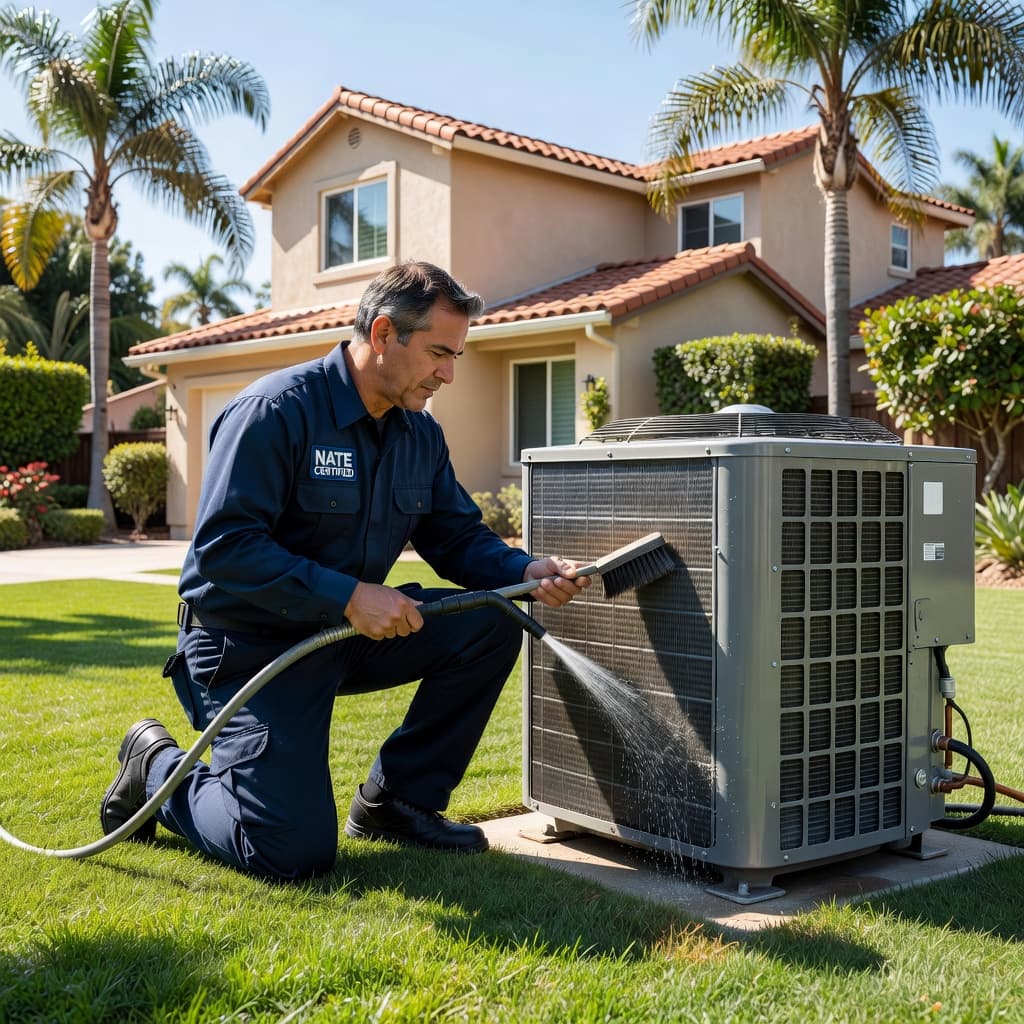
While you are there, inspect the insulated refrigerant line. Cracked or missing insulation allows the sun to heat that line, which can negatively impact cooling efficiency. Also, check whether the outdoor condenser unit sits level on its pad. A slight tilt may not matter, but a unit that has clearly shifted should be inspected.
Finally, look for warning signs you should not ignore. Oily residue near tubing, chewed wires, a bent fan guard, or heavy corrosion point to trouble that cleaning cannot fix. For a spring AC checklist in Carlsbad, this outdoor step matters even more because the local environment can speed up wear on metal parts.
Run a spring test cycle and watch the first 15 minutes
Once the indoor and outdoor checks are done, restore power and start the system. Set the thermostat about 5 degrees below room temperature to prepare your home for the coming summer heat. Let the unit run for at least 15 minutes to evaluate how it performs. Then listen.
A healthy start-up, indicating strong system performance, usually sounds steady. You may hear the thermostat click, the indoor blower come on, and the outdoor unit start within a short window. Loud buzzing, hard starts, grinding, or a breaker that trips right away are not normal.
Walk to a few supply vents and feel the air. It should become clearly cooler within several minutes. If you want a simple home check, compare the air near a return grille with the air from a supply vent. In many central systems, the cooled air is often about 15 to 20 degrees lower.
This quick guide helps sort out what you are noticing:
| What you notice | Often normal | Time to call |
|---|---|---|
| A brief dusty smell on first start | Yes, if it fades fast | No, if it turns musty or burnt |
| Water dripping outside at the condensate drain line | Yes, this helps prevent water damage | Call if water pools inside |
| Condensation on the larger refrigerant line | Usually | Call if the line turns icy |
Also pay attention to humidity. A working system should cool and gradually dry the air. If the house feels cold but sticky, or if one part of the home gets almost no airflow, your system may need service. That is often the point where a routine check turns into a real ac repair issue.
What you can do yourself, and when to call for help
DIY HVAC maintenance has value, but only within clear limits. While homeowners can replace filters, clear debris, open vents, rinse the condenser gently, and confirm thermostat settings, these small steps are just the beginning of a healthy system. For more complex tasks, scheduling a professional tune-up is essential to ensure your cooling system operates efficiently all season long.
Once the job moves into electrical parts, refrigerant, or internal components, stop there. Capacitors can hold a charge, and coils or wiring can be damaged by improper cleaning. Refrigerant problems also require specialized, licensed handling.
Call a licensed HVAC technician if your system shows any of these signs:
- It blows warm air after 10 to 15 minutes of runtime.
- The breaker trips, even once, during start-up.
- Ice forms on the refrigerant line or indoor coil.
- You hear screeching, grinding, or loud buzzing.
- Water leaks around the indoor unit or ceiling below it.
Spring is the perfect time to schedule your professional tune-up. During this visit, a technician will verify refrigerant levels, test electrical components, perform a ductwork inspection, and clean coils properly. Comprehensive HVAC maintenance helps catch wear before the first heat wave. That matters whether you are in Carlsbad, San Marcos, Poway, Fallbrook, or central San Diego.
If your system uses a heat pump, the advice remains the same. If it uses a furnace and separate AC coil, the shared airflow pieces still matter just as much. Either way, a smooth spring start and routine service help you prevent breakdowns and give you a better shot at a trouble-free summer.
A smoother cooling season starts in spring
The first wave of summer heat shouldn’t be a stress test for your system. By performing a clean filter check, clearing the condenser, and running a careful test cycle, you can catch a surprising number of problems before they grow, all while boosting your system’s energy efficiency.
If your unit starts hard, cools unevenly, or shows signs of a repair need, don’t wait for a crowded July schedule. You can Book Online to schedule service when you are ready to get ahead of the season.
FAQ
When should I do a spring A/C start-up in San Diego?
March or April is usually the sweet spot. That gives you time to identify potential issues before the first long stretch of summer heat, when service calendars fill up across San Diego County.
Can I hose off my outdoor condenser myself?
Yes, as long as you shut off power first and use gentle water pressure. You can perform basic cleaning coils on your outdoor condenser unit, but skip pressure washers, harsh chemicals, and any maintenance that requires you to handle internal wiring or remove major service panels.
Why does my air conditioner smell dusty the first time I use it?
A short-lived dusty smell can happen after months of sitting, especially if the filter is old. A burnt smell, a strong musty odor, or a smell that lingers needs professional attention because it can point to mold, wiring trouble, or a dirty evaporator coil.
Does this checklist change for ductless or mini-split systems?
The timing stays the same, but the cleaning steps differ. Indoor heads, washable filters, and outdoor units still need spring attention, and this ductless AC maintenance guide is a helpful place to start.
Should I check my heating system too?
Yes, at least at a basic level. Your heating and cooling equipment often share filters, blowers, and ductwork, so a spring check can reveal issues that carried over from winter furnace use. Scheduling a professional tune-up can also help you identify if your older equipment requires electrical panel upgrades to handle modern cooling demands.