

AC Banging Noise in Escondido: Safe DIY Checks
My Guy is Proud to Be "Your Guy" for Your Home
A loud bang from your air conditioner can turn a normal Escondido afternoon into a stressful one. An AC banging noise Escondido homeowners hear may come from a loose panel, a failing fan, or a part that needs prompt professional attention, especially when the intense Escondido heat pushes your cooling system to its limits.
Don’t keep the system running while you try to identify the sound. A few safe checks can narrow down the source, protect your equipment, and help you know when to call for AC repair.
Key Takeaways
- Turn the A/C off if a banging noise is repeated, violent, or paired with burning smells, weak airflow, or tripped breakers.
- Check for loose debris, panels, and visible damage without opening electrical compartments.
- Banging from the outdoor unit often involves the fan, compressor mounts, or loose cabinet parts.
- Never reach through a condenser grille or attempt electrical, refrigerant, or motor repairs yourself.
- A qualified hvac professional can find the cause before a small vibration damages larger parts, meaning you can often avoid a costly emergency AC repair.
AC Banging Noise Escondido: Start With Safety
First, turn your thermostat to “off.” If the system was running, wait until the indoor blower and outdoor condenser stop completely. Then switch off the outdoor disconnect only if you can do so without opening equipment panels or touching exposed wiring.
A single soft pop can come from sheet metal expanding as the system changes temperature. Repeated bangs, rattles that grow louder, or a heavy slamming noise at startup need more attention. Those sounds often mean a loose component has shifted or a motor is struggling.
Walk around the outdoor unit from a safe distance. Look for fallen palm fronds, twigs, patio items, or a loose cover against the condenser. Escondido’s dry, windy conditions can push debris into the unit’s protective grille. Remove loose objects from around the outside only after the system is off.
Do not remove the top fan grille. The fan blade sits beneath it, and electrical components inside the cabinet can hold a charge even after power is disconnected.
A banging sound that begins with a breaker trip, a hot electrical smell, smoke, or visible sparking calls for an immediate shutdown and professional service.
If the sound comes from an indoor unit located in a closet, attic, or garage, keep children and pets away from it. A loud metal-on-metal hit near a furnace or air handler can involve the blower wheel, a loose access panel, or a failing motor.
Find Where the Bang Starts
The location and timing of the noise provide useful clues. Stand several feet away while another adult turns the thermostat on, then listen without touching the equipment. If the noise is severe, shut the system down right away.
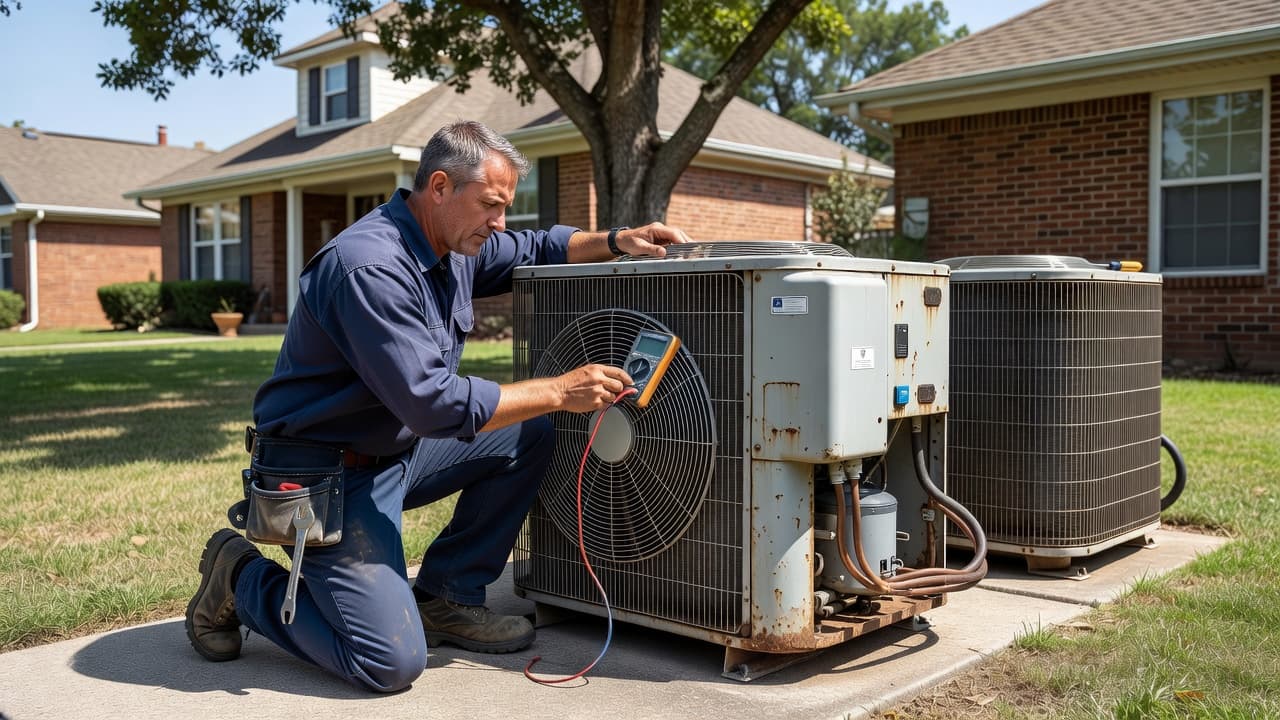
Use these patterns as a guide, not a repair diagnosis:
| When or where it happens | Possible issue | Safe homeowner action |
|---|---|---|
| One bang when cooling starts | Loose cabinet panel or compressor movement | Shut down and check exterior screws or panels |
| Repeated banging outdoors | Fan blade, loose debris, damaged mount | Keep unit off and inspect from outside the grille |
| Banging from indoor air handler | Loose blower fan or cabinet panel | Turn off power and schedule service |
| Bang followed by poor cooling | Compressor or fan problem | Stop running the system and call for repair |
| Noise when heating starts | Duct expansion or furnace blower issue | Note the timing and have it checked if persistent |
A loose access panel may rattle or slap the cabinet as the unit vibrates. Exterior panel screws sometimes back out over time, especially on older equipment. If you can clearly see a loose outside panel screw and it is far from wiring, you can tighten it gently with the correct screwdriver. Stop if the panel doesn’t sit flush.
Banging that comes from behind the grille of your outdoor condenser unit is different. A bent fan blade can strike the cabinet, while a worn fan motor may let the blade wobble. Both problems can damage the equipment quickly, so leave the system off until an HVAC technician checks it.
An AC banging noise Escondido residents notice only when the compressor starts may also point to worn out rubber parts like a compressor mount. Those mounts reduce vibration, but they are not a DIY replacement.
Safe DIY Checks That Don’t Involve Taking Equipment Apart
Homeowners can complete a few basic checks without risking contact with high voltage or moving parts. Keep the thermostat off throughout the inspection. Wear closed-toe shoes and use a flashlight rather than reaching into dark spaces.
- Clear the condenser’s perimeter. Remove leaves, loose mulch, branches, toys, and furniture within about two feet of the outdoor cabinet. Don’t hose the unit down while you are troubleshooting a noise. Water can hide the source and add risk around damaged wiring.
- Look at the cabinet from every side. Check for a visibly loose corner, dented grille, missing screw, or shifted top cover. Photograph anything unusual. Clear photos help a technician assess what happened before the system runs again.
- Inspect the refrigerant line cover. The insulated copper line running into the home should not bang against siding or metal conduit. If its exterior cover has come loose, don’t tape refrigerant lines or force them into position. Note the location for your service call.
- Check the return-air filter. A severely clogged air filter reduces airflow and can make the indoor system work harder. Replace it with the correct size and airflow rating. The filter won’t usually cause a bang by itself, yet it can worsen stress on an already struggling blower.
- Look at accessible vents and registers. A loose metal register can rattle when air starts moving through your ductwork. Press it lightly after the system is off, then tighten visible register screws if needed. Do not close most supply vents in an effort to quiet the noise, because restricted airflow can create other problems.
- Review recent changes around the unit. New landscaping, a shifted trash bin, roof work, or a patio project may have placed something against the equipment. A fast visual check often finds these simple causes.
Keep a brief record of what you heard. Note whether the bang happens during startup, shutdown, cooling, or heating. Also write down whether the air stayed cool and whether the noise came from indoors or outdoors. This information saves time during diagnosis.
Avoid opening electrical service panels, replacing a failing capacitor, adjusting fan blades, or adding refrigerant. Those tasks require proper testing equipment and training. They can also void equipment warranties or create serious shock hazards.
When Banging Means You Need AC Repair
Call for professional AC repair if the sound repeats after you clear surrounding debris and check visible panels. An hvac professional can safely test the capacitor, contactor, fan motor, blower assembly, compressor mounts, and electrical connections.
Stop using the air conditioning system until help arrives if you notice any of these warning signs:
- The outdoor fan does not spin, spins slowly, or strikes the grille.
- The system blows warm air after a loud bang, which can point to a refrigerant leak or a failing evaporator coil.
- The breaker trips, lights flicker, or you smell hot plastic.
- The cabinet shakes hard enough to move on its pad, often leading to short cycling.
- Ice forms on the refrigerant line or indoor coil area.
A noisy system may produce different sounds as a worn part deteriorates. For example, a bang can become a buzz when a motor or electrical component starts failing. This buzzing AC repair guide explains other warning signs that call for a shutdown rather than more troubleshooting.
For homes in Escondido, dependable HVAC service should include a full inspection rather than a guess based on sound alone. The same applies to a furnace noise in winter. Blower assemblies and ductwork can create similar bangs, but their repairs require different steps.
Keep Future AC Noises From Sneaking Up
Routine annual maintenance catches loose hardware and worn moving parts before they become loud. Have the system inspected before heavy summer use, especially if it is older, runs for long stretches, or has needed repairs before.
Between visits, replace filters on schedule, keep the condenser clear, and listen for changes in your air conditioner and its normal hum. A new vibration is easier and less expensive to address before it becomes a hard knock. For older units that frequently break down, keeping up with upkeep can sometimes reveal when a system replacement makes more financial sense than endless fixes.
Homeowners in nearby San Marcos, Vista, Carlsbad, Oceanside, Fallbrook, Poway, and San Diego can use the same safety rule: a sound that gets louder or changes system performance should not be ignored.
A Safer Response to a Banging AC
A loud air conditioner doesn’t always mean a major failure, but it deserves a calm response. Shut the system off, check the exterior for simple obstructions, and leave internal components alone.
The safest move is to protect the equipment before a loose or failing part causes more damage. For help resolving an AC banging noise Escondido residents can rely on a trusted hvac professional to Book Online for a professional inspection.
FAQs
Can I run my AC if it only bangs once at startup?
You can monitor a single mild sound if cooling works normally and no other symptoms appear. However, repeated startup bangs, shaking, or weaker cooling mean you should turn it off and arrange service.
Why does my outdoor unit bang when it shuts off?
A loose panel or compressor movement can make a bang during shutdown. The fan may also wobble as it slows down. Because the source is inside the cabinet, avoid removing the grille or top cover.
Can a dirty air filter cause a banging sound?
A dirty air filter rarely causes banging on its own. It can restrict airflow and put added strain on the blower system, which may make an existing problem more noticeable.
Is a banging furnace dangerous?
It can be. A bang from duct expansion may be harmless, but repeated loud noises from the furnace cabinet, burner area, or blower should be inspected. Shut off the heating system if you smell gas, burning material, or see any signs of smoke.