

AC Filters San Diego: Disposable or Washable?
My Guy is Proud to Be "Your Guy" for Your Home
A neglected filter can make your air conditioner work harder long before you notice a comfort problem. For San Diego homeowners, the better option depends on your system, household, and local air conditions.
Coastal moisture, inland dust, pet exposure, spring pollen, Santa Ana winds, and wildfire smoke can all speed filter loading. These conditions also affect indoor air quality. The right choice protects airflow and supports energy efficiency by keeping your system from pushing against unnecessary resistance.
Key Takeaways
- Disposable pleated filters are the best fit for most San Diego homes because they provide consistent airflow and stronger particle capture than many washable filters.
- Choose a MERV rating your HVAC system can handle; MERV 8 to 13 may suit different needs, but excessive restriction can strain the blower and reduce airflow.
- Inspect 1-inch filters monthly and replace them every 30 to 90 days based on household conditions, including pets, allergies, dust, Santa Ana winds, and wildfire smoke.
- Install the correct filter size with the airflow arrow pointed toward the blower, and allow washable filters to dry completely before reinstalling them.
- If weak airflow, uneven cooling, odors, or excessive dust continue after a filter change, schedule professional HVAC service to check the blower, coil, ductwork, static pressure, and filtration setup.
Disposable vs. Washable Filters for San Diego Homes
Disposable pleated filters are the practical choice for most central air conditioning and heating systems. These HVAC filters also serve as furnace filters, with reliable sizes and MERV ratings for many residential air filtration systems. A fresh filter provides predictable airflow. Once it is dirty, replace it rather than trying to restore worn filter media.
Washable filters cost more upfront but can be rinsed and reused, reducing waste. Many use an electrostatic design that catches larger airborne debris. However, reusable models often have lower fine-particle capture than a quality pleated disposable filter. They need complete drying before reinstallation, since a damp filter can encourage mold growth and damage equipment.
This comparison helps narrow the decision:
| Filter type | Best fit | Main upside | Watch for |
|---|---|---|---|
| Disposable fiberglass | Light filtration needs | Low purchase price | Captures fewer fine particles |
| Disposable pleated | Most San Diego homes | Available in useful MERV ratings | Requires routine replacement |
| Washable electrostatic | Homes focused on reducing waste | Reusable for years with proper care | Often lower MERV performance and needs cleaning |
| Thick media filters | Systems with compatible cabinets | More surface area and longer service intervals | Requires the right housing |
For a home with pets, allergies, or frequent air conditioning use, a disposable pleated filter usually wins because it captures pet dander consistently. It is also the simpler option after a smoky week or wind event, when indoor dust rises fast and a dirty filter can reduce energy efficiency.
Before buying a case of filters, review the available types of air conditioning filters and check whether nonstandard dimensions call for custom air filters. The filter slot, return grille, and manufacturer guidance matter as much as the label on the package.
Choose a MERV Rating That Your System Can Handle
MERV ratings help compare filters used in residential air filtration systems. They show how effectively a filter captures particles across several size ranges. Higher numbers capture smaller particles, but they can also increase airflow resistance and blower workload. The goal is healthy indoor air quality, stable system pressure, and reasonable energy efficiency, not the highest rating available.
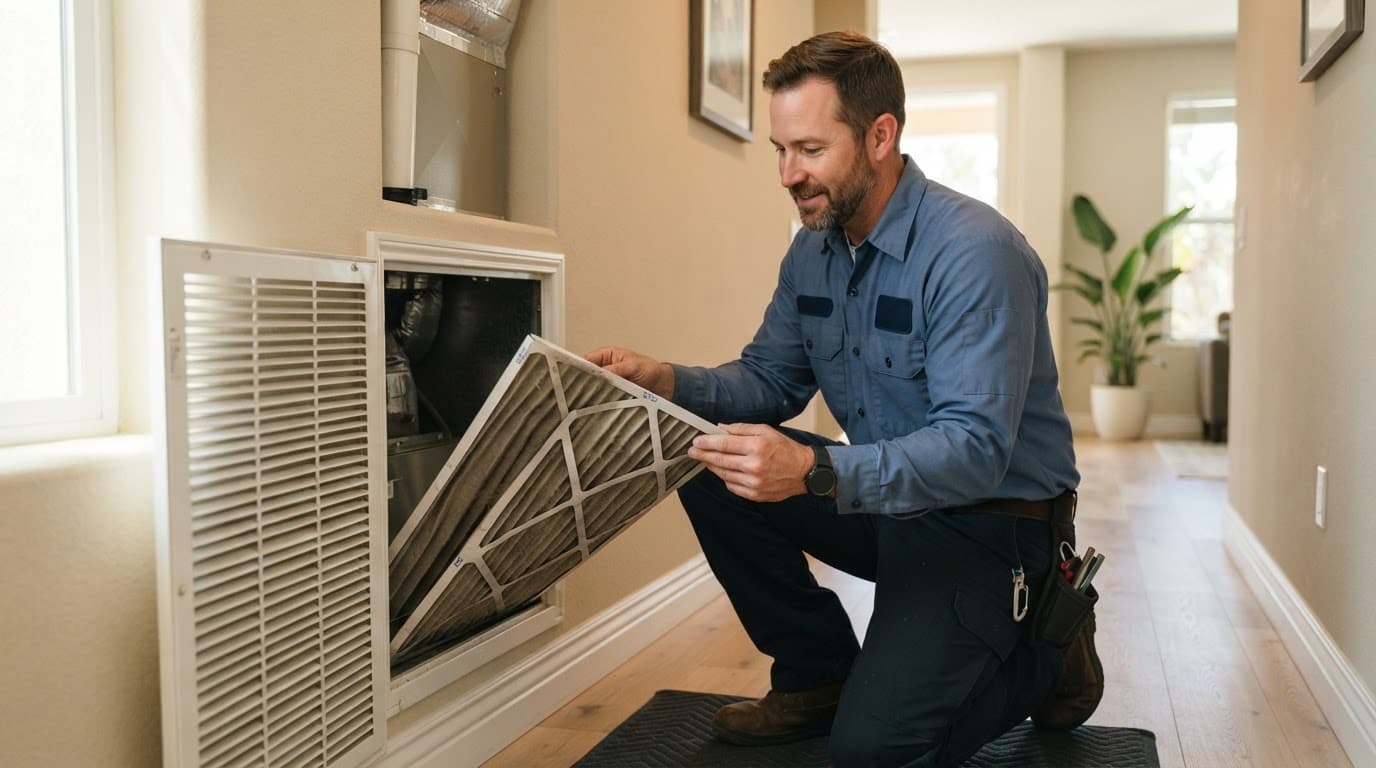
For many homes, a MERV 8 filter captures ordinary household dust, lint, and larger pollen. MERV 11 is a solid step up for pet dander, mold spores, finer pollen, and dust mites. A MERV 13 filter captures more fine particles, including a meaningful share of wildfire smoke particulate.
A MERV 13 filter can improve particle filtration, but a restrictive filter in the wrong 1-inch slot may reduce airflow and strain the blower.
Smoke is more complicated than dust. Smoke from a wildfire contains fine particles and gases. Activated carbon filters can help reduce odors and some gaseous contaminants, but they do not capture all smoke particles. Carbon has limited capacity, so it needs replacement after exposure. For stale indoor air, ventilation solutions may help when outdoor conditions are safe. Ventilation does not replace particle filtration.
UV-C light purifiers are one option within air purification systems. When installed correctly near an evaporator coil, they may help limit microbial growth on damp surfaces. They do not capture pollen, pet dander, or smoke particles. UV-C works alongside a filter, not in place of one.
True HEPA filters capture at least 99.97% of particles at 0.3 microns. Most standard residential systems cannot accept true HEPA filtration without a suitable cabinet, added airflow capacity, or changes to ductwork. Whole home air filtration uses deeper media filters or a dedicated cabinet to add surface area while keeping pressure manageable. Excessive resistance or unapproved modifications can still create airflow problems.
DIY Filter Sizing and Replacement Timing
Start with the HVAC filters already in your return grille or furnace cabinet. Look for the printed nominal size, such as 16 x 25 x 1, and measure the actual filter if the label is faded. A nominal 16 x 25 x 1 filter may measure closer to 15.5 x 24.5 x 0.75 inches. Measure nonstandard openings for custom air filters, using the same sizing and airflow-arrow principles as common furnace filters.
Follow these steps before installing a new filter:
- Turn off the HVAC system at the thermostat.
- Match the length, width, and depth exactly, and never force a filter into the slot.
- Point the airflow arrow toward the blower, which is usually toward the furnace or indoor air handler.
Inspect a 1-inch disposable filter every month during heavy summer cooling or winter heating use. This is basic HVAC maintenance, not a substitute for professional service. In many San Diego homes, air filter replacement every 30 to 60 days is appropriate. A lightly used home with no pets may reach 90 days. Homes near open space in Poway or inland Escondido may need a faster schedule after windy weather. Timely changes support energy efficiency by preserving airflow and keeping the blower from working against a loaded filter.
Thicker 4- or 5-inch media filters often last six to 12 months, depending on the household and the manufacturer. Washable filters need a monthly inspection and a thorough rinse when buildup is visible. Let the filter dry fully before reinstalling it.
Subscription deliveries can reduce missed changes, but set the cadence around actual filter condition. A 60-day delivery schedule suits many 1-inch filters. Pause, accelerate, or skip shipments after checking the filter, especially during wildfire season or after a low-use month.
Ductless A/C units use washable mesh filters rather than central-system filters. Their maintenance is different, so follow guidance for cleaning ductless AC filters instead of using a central-system schedule.
When a Dirty Filter Calls for HVAC Service
A gray filter does not always explain poor indoor air quality. A clean replacement may not solve every comfort or airflow complaint. If airflow stays weak after installation, problems may extend beyond air filtration systems to the blower, coil, ductwork, or refrigerant. In that case, an Escondido HVAC service visit can identify the actual restriction before it grows into an AC repair.
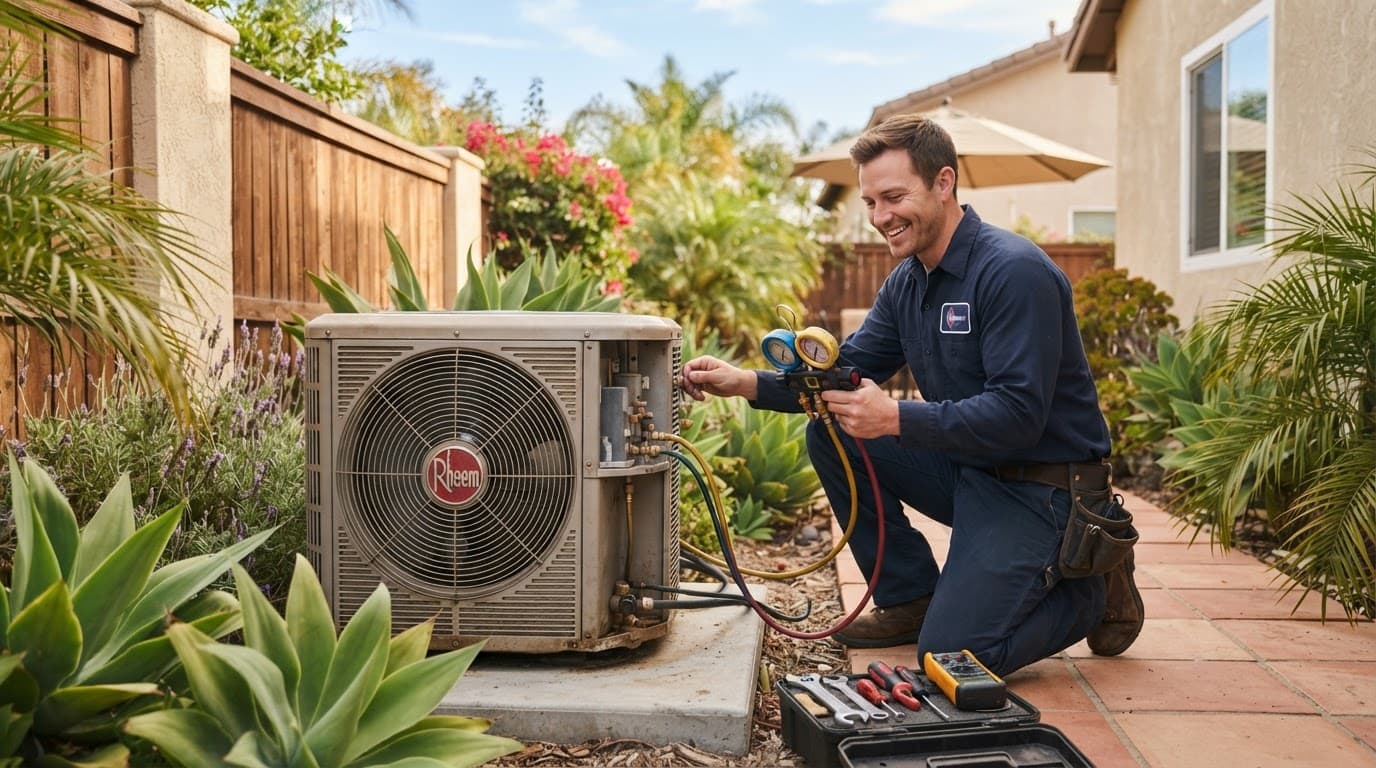
Watch for these signs that your air filtration system is underperforming:
- Rooms feel stuffy or have noticeably weaker air at supply vents.
- The AC runs longer than usual, yet the home does not cool evenly.
- Dust returns quickly after cleaning, or pet dander remains noticeable and allergy symptoms increase indoors.
- The filter bows inward, looks dark across its surface, or has a musty odor.
- The furnace shuts down unexpectedly or makes new blower noises.
An HVAC maintenance visit can include an air quality assessment. It can also determine whether a compatible deeper cabinet supports whole home air filtration. An air cleaner with activated carbon filters may help control odors, but it does not replace particle filtration.
If stale air points to limited air exchange, ventilation solutions may help. A technician should evaluate outdoor conditions, system design, and airflow before recommending an upgrade.
For permitted new homes and qualifying alterations, California Title 24 includes air-filtration and energy efficiency requirements that can include MERV 13 filtration for many ducted systems. The code does not mean every existing system should receive the densest filter available. A technician should check static pressure, filter access, and blower performance before an upgrade.
Frequently Asked Questions
How often should San Diego homeowners replace AC filters?
Check monthly, then replace a 1-inch disposable filter every 30 to 90 days based on use, pets, allergies, and outdoor conditions. During Santa Ana winds or wildfire smoke, inspect sooner. Coastal homes may need attention after humid periods if dust and moisture collect around returns.
Is a washable filter better for indoor air quality?
Usually, no. Washable filters can reduce disposal waste. However, many capture fewer fine allergens than a quality pleated filter. That difference can affect indoor air quality. Activated carbon filters may help with some odors and gases, but they do not replace a properly sized particle filter. Washable filters work best when you clean and dry them consistently.
Can I use a MERV 13 filter in my existing HVAC system?
Possibly, but compatibility matters. Check the equipment manual, filter depth, static pressure, and airflow performance first. When comparing AC filters San Diego homeowners often focus on capture ratings. The right filter must also support adequate airflow and energy efficiency.
A Filter Choice That Supports Year-Round Comfort
Disposable pleated filters give most homes the clearest path to consistent airflow and stronger particle capture. Washable filters can still fit low-demand households that clean and dry them consistently. Homes with unusual cabinet or grille dimensions may need custom air filters for a correct fit.
Match the filter’s restriction level to your system’s capacity. Changing it as local conditions change supports airflow, system performance, and energy efficiency.
If a clean filter does not resolve comfort, odor, or airflow concerns, a professional air quality assessment can help identify the cause. It can also determine whether whole home air filtration or ventilation solutions are appropriate. Book Online for a professional inspection before a small filter problem becomes a larger heating or cooling repair.