

AC Screeching in Encinitas? What the Noise Means
My Guy is Proud to Be "Your Guy" for Your Home
A healthy air conditioning system should hum, not scream. If you notice your AC screeching in Encinitas, it means something inside the mechanism is rubbing, slipping, or wearing out.
That noise can come from a minor issue, but it can also serve as a critical warning before your AC unit experiences a complete motor failure. The good news is that the sound usually points to a short list of potential causes, and a few safe checks can help you decide what steps to take next.
Key Takeaways
- Identify the Source: A screeching sound usually indicates mechanical friction; listen closely to determine if the noise is coming from your indoor blower unit or the outdoor condenser to help narrow down the cause.
- Avoid Ignoring Early Warnings: While a screech might be brief at startup, it is often a sign of failing bearings, worn belts, or struggling motors that will eventually lead to a total system failure if left unaddressed.
- Coastal Factors Matter: In Encinitas, salt air corrosion, dust, and debris can accelerate the wear on moving parts, turning minor mechanical issues into loud, persistent squeals.
- Safe Diagnostics: You can perform simple checks, such as switching your thermostat to “fan-only” mode or checking for visible obstructions, but you should avoid DIY repairs like lubricating internal components or bending blades, which can worsen the damage.
- Prioritize Professional Service: If you hear persistent screeching, or if it is accompanied by warm air, burning smells, or poor airflow, schedule a professional inspection immediately to prevent a minor part replacement from becoming a costly total system breakdown.
What a screeching AC usually points to
A high-pitched screech is distinct from a hiss or a rattle. While hissing often points to air loss or refrigerant trouble and a whistling sound usually signals restricted airflow, a screeching, squealing noise indicates mechanical friction. You might also notice a high-pitched squeal that suggests a moving part is struggling to operate correctly.
The first clue is where the sound originates. If the noise comes from inside, the problem may be in the blower section, often located in the air handler or furnace cabinet. If the noise comes from the outdoor unit, the condenser fan motor or the compressor is the more likely culprit.
This quick guide can help you narrow down the source of the trouble within your ac unit:
| When you hear it | Common source | What it may mean |
|---|---|---|
| Right at startup | Motor bearings, belt, capacitor | A worn part struggles under load |
| From the indoor unit | Blower motor, blower wheel, older belt | Friction inside the air handler or furnace area |
| From the outdoor unit | Condenser fan motor, fan blade, compressor | Outdoor parts are rubbing or failing |
| Off and on during a cooling cycle | Fan blade contact, loose hardware | Metal may be touching where it shouldn’t |
Older systems sometimes screech because of a worn belt. Most newer residential units do not use belts in the same way, so bad bearings in the fan motor are a more common cause. A bent blower wheel or fan blade can also scrape metal and create a sound that feels impossible to ignore.
Timing matters too. A brief squeal at startup is often an early warning. A constant screech usually means the part is already in rough shape. When homeowners describe ac screeching in Encinitas, they are often hearing a blower motor or condenser fan motor that is close to failing.
That matters beyond summer comfort. The same blower assembly that pushes cool air in July may handle heating airflow later. Ignore these strange noises now, and the same problem can show up when the furnace kicks on in winter.
Why Encinitas homes hear this at odd times
Encinitas has a mild coastal climate, and that changes how AC problems show up. Because the weather stays comfortable for long stretches, many systems sit mostly quiet until the first hot spell. Then a dry bearing, worn motor, or tired fan suddenly announces itself.
The coastal environment plays a significant role in equipment health. Salt air corrosion is particularly hard on metal parts over time. A little rust around a fan motor or mounting point can turn a smooth spin into a sharp squeal.
Location also affects what you hear. Outdoor units in side yards, near stucco walls, or next to patios can bounce sound back toward the house. What seems like a major breakdown may be a smaller issue that simply sounds louder because the ac unit is positioned in a tight space.
We see this same pattern across the region. Whether you need reliable ac repair Encinitas, comprehensive hvac service in Escondido, tune-ups in Carlsbad, heating repair in San Marcos, maintenance in Oceanside, inspections in Vista and Fallbrook, or any other cooling solutions throughout San Diego County, the stressors on your system remain similar.
Another local factor is dust and yard debris. Even near the coast, outdoor condensers collect leaves, seed fluff, and dirt. That buildup can make the fan work harder. When a motor is already worn, extra strain often turns a faint squeak into a full screech.
So while the climate here is easier than inland heat, it can still hide trouble until the system suddenly has to work.
Safe DIY checks before you call
You don’t need to take panels off or touch wiring to learn something useful about these strange noises. A few safe checks can tell you whether the sound is coming from the indoor side, the outdoor side, or both.
- Switch the thermostat fan from “Auto” to “On” for a minute. If the screech happens in fan-only mode, the indoor blower is a strong suspect. If it only happens during cooling, the outdoor unit may be the issue.
- Check the air filter. A clogged filter does not usually create a screech by itself, but it can strain the blower and expose a weak motor. Regularly changing your filter is also a great way to support better indoor air quality throughout your home.
- Look at the outdoor ac unit from a safe distance. Leaves, twigs, or a loose panel can interfere with airflow or cause vibration. Keep your hands out of the fan guard at all times.
- Record the sound on your phone. Note whether it starts at startup, runs the whole cycle, or fades after a minute. That helps a technician diagnose it faster.
A sharp screech is usually a friction problem, and friction gets worse the longer the system runs.
A few things are not good DIY jobs. Do not spray lubricant into random openings. Do not bend a fan blade back into place. Do not keep resetting the breaker if the system trips it. Those moves can make a repair larger and less predictable.
Shut the air conditioning system off if the screech is paired with weak airflow, warm air, a burning smell, or a fan that will not spin up. At that point, you are past simple homeowner checks and into professional air conditioning repair territory.
When it’s time to schedule AC repair
Once a screeching sound occurs more than once, waiting rarely helps. If you notice persistent noise, it is time to seek professional AC repair Encinitas residents trust. A service technician from a qualified Encinitas HVAC company can quickly determine whether the trouble stems from a fan motor, blower wheel, compressor, capacitor, or mounting issue. Without proper testing, these problems often sound identical, and a professional diagnostic fee is a small price to pay to identify the root cause before a total breakdown occurs.
If the noise originates from the outdoor condenser, the technician will inspect the fan motor, blade alignment, capacitor, and compressor startup. If the sound comes from the indoor cabinet, they will examine the blower motor, wheel balance, and any signs of components rubbing against the housing. In cases where the system fails entirely during a heat wave, many providers offer emergency AC repair to restore comfort to your home quickly.
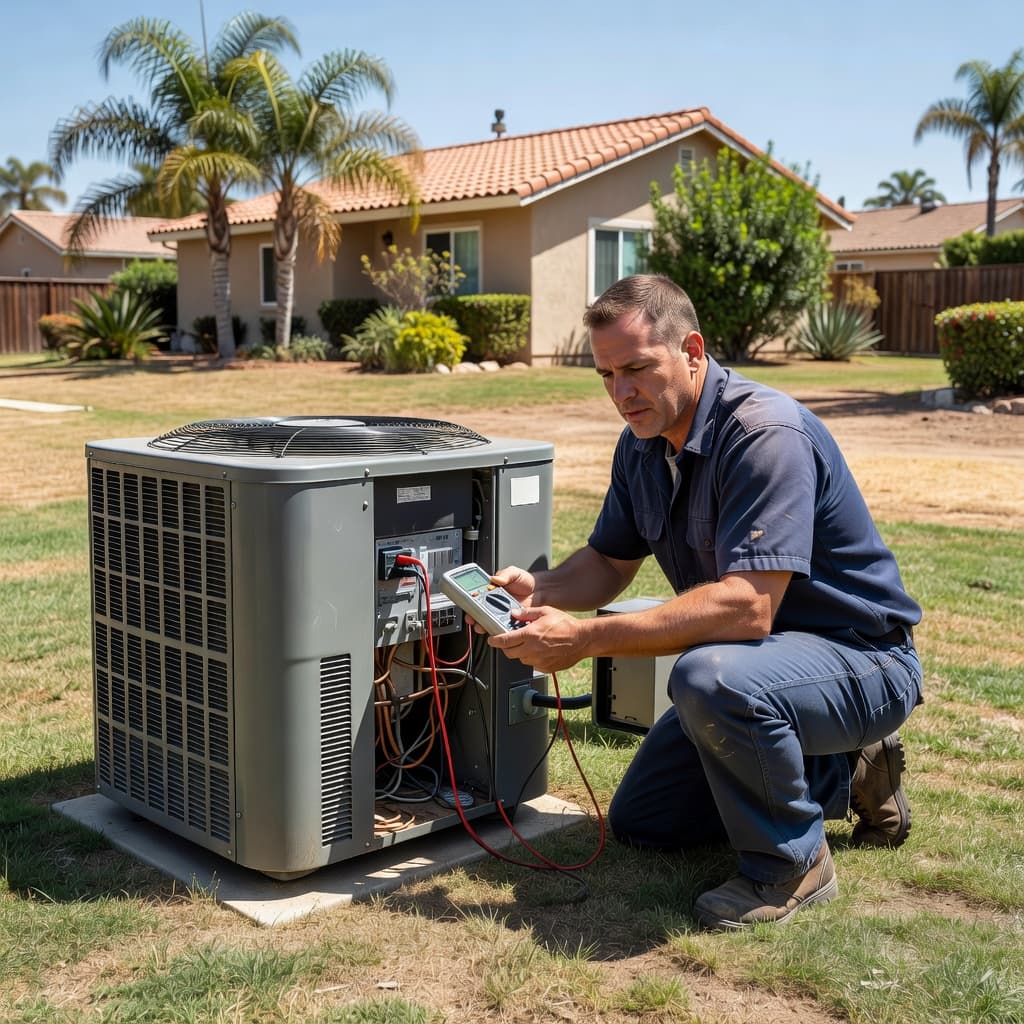
Ignoring short-term noise often leads to long-term damage. A failing motor draws more strain, and a rubbing fan blade can damage nearby parts. Even when the unit continues to cool for a while, repairs become significantly more expensive once a part fully gives out. If your cooling system is an aging AC unit, it may be more cost-effective to discuss modern HVAC installation options rather than constant repairs.
After the fix, regular HVAC maintenance can catch worn motors, dirty coils, and loose hardware before they cause a failure. This proactive approach matters for your entire system, not just summer cooling. A noisy blower often affects airflow in both cooling and heating modes. What starts as an August screech can easily turn into a need for furnace repair when the heating season begins.
Quiet is the goal
When your AC screams instead of hums, the sound is telling you something useful. Most of the time, screeching points to friction, wear, or a part that is close to failing. Maintaining a quiet home environment is the goal, and addressing these noises quickly is the best way to ensure your comfort.
Catching these issues early can prevent a minor mechanical problem from turning into a costly emergency. Whether you need comprehensive residential hvac maintenance or a specific hvac service to restore your system to peak condition, our team is here to help. If the noise persists, or you want a qualified service technician to pinpoint the problem immediately, you can Book Online.
FAQs
Can I keep running my AC if it’s screeching?
It is better to limit use until you know the cause. A quick test is fine, but regular operation can wear out bearings, damage a fan motor, or worsen blade contact. Turn off your ac unit if cooling drops, airflow weakens, or you smell something hot.
Is a screech always a bad motor?
No. Motors are common culprits, but they are not the only ones. A loose belt on an older system, a misaligned fan blade, or compressor trouble can make a similar sound. Modern systems like ductless mini-splits lack belts entirely, so a screeching sound in those units often points directly to fan or blower motor issues. The location of the noise helps narrow it down.
Can a dirty filter make an air conditioning system screech?
Usually not by itself, but it can negatively impact your indoor air quality. A packed filter forces the blower to work harder, and that extra strain may expose a weak motor or a worn bearing. If the noise changes after a filter swap, the system still deserves a proper check. We always recommend routine maintenance to prevent motor failure and keep your system running smoothly.
Why does my air conditioning screech only at startup?
Startup puts the most stress on moving parts. Weak bearings, slipping belts, and tired capacitors often complain for a few seconds before settling down. That short burst of noise is easy to dismiss, but it is often the early warning sign that precedes a full breakdown. Addressing these sounds early with professional maintenance can save you from a complete loss of cooling.