

AC Refrigerant Line Insulation: A DIY Inspection Guide
My Guy is Proud to Be "Your Guy" for Your Home
A brittle foam sleeve can turn a normal cooling cycle into water streaks down your siding. That insulation protects the cold copper lines between your outdoor unit (the compressor unit) and home, helping with condensation control.
The good news is that most homeowners can inspect the exposed line set without opening the air conditioner. However, recurring moisture or other symptoms may require professional AC repair.
Use this guide to identify the right line, judge the damage, and make a safe exterior repair.
Refrigerant Line Insulation: Find the Pipe That Needs It
Your compressor unit connects to the home through a line set containing two copper lines. They often run together beneath pipe insulation, foam, or a protective cover.
The larger suction line needs insulation
During cooling, the suction line carries cold, low-pressure refrigerant vapor back to the unit. It is usually covered in black foam or rubber insulation.
When that insulation is intact, it slows heat gain and acts as a vapor barrier against humid outdoor air condensing on cold copper. Once it cracks, the larger pipe can sweat and drip onto stucco, siding, soil, or electrical components near the condenser.
Water on a bare suction line points to a missing vapor barrier, while ice on the line points to an operating problem that foam alone won’t fix.
Trace the larger pipe from the compressor unit to the wall. In most central air systems, this is the line that needs continuous coverage, including seams and elbows.
The smaller liquid line may stay bare
The thinner pipe is often 1/4-inch or 3/8-inch copper. On a standard central air conditioner, it commonly runs warmer during cooling and may not need insulation.
Leave the smaller line as the manufacturer installed it. A ductless system, such as a mini split, often protects both lines inside the line-set bundle. A heat pump may also have equipment-specific requirements because refrigerant flow changes during heating mode. Manufacturers may require different coverage, so check the unit manual before adding material to the smaller line.
Inspect the Exterior Line Set Before Buying Supplies
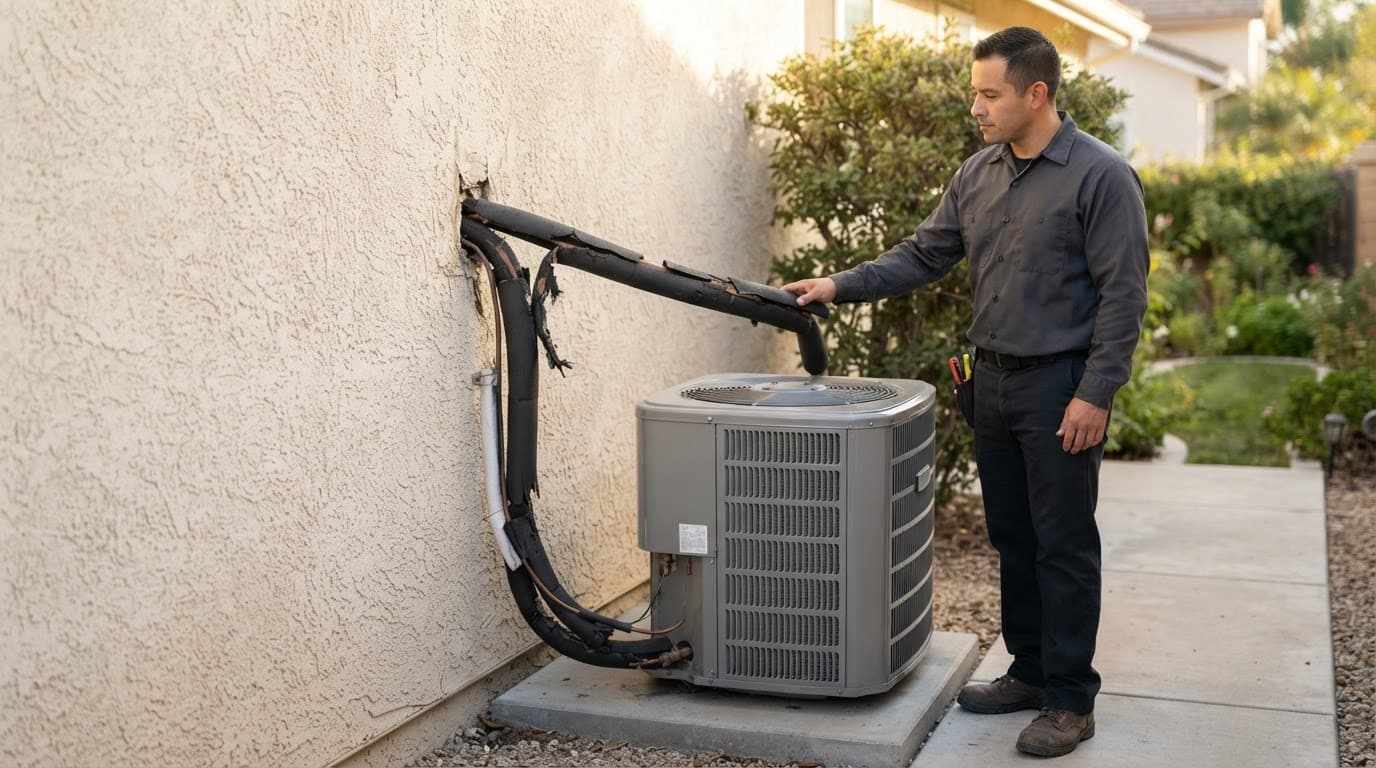
A quick inspection in spring and late summer catches sun damage before the foam falls apart. UV exposure, lawn equipment, birds, rodents, and rubbing against sharp metal can all weaken pipe insulation over time.
Start at the condenser and follow the full route
Turn off the thermostat, then shut off the disconnect for the outdoor unit before working near the compressor unit. Don’t remove service caps, electrical panels, electrical covers, or copper fittings.
Use a flashlight and inspect refrigerant line insulation along the full visible route. Look for:
- Foam that feels chalky, crumbles, or splits when lightly pressed.
- Open seams, exposed copper, and gaps around elbows.
- Flattened insulation that no longer surrounds the pipe.
- Missing material where the lines enter the exterior wall.
- Damp streaks on the wall or ground below the suction line.
Separate a foam problem from a system problem
A torn seam can allow humid air to reach cold copper, causing condensation. Repair the vapor barrier to stop that water, and keep moisture away from the compressor unit’s electrical components.
Ice, oily residue, hissing, weak cooling, or a suction line that repeatedly freezes need an HVAC technician. Weak cooling can signal reduced cooling capacity, not just damaged foam. A dirty filter, blocked evaporator coil, low refrigerant charge, or airflow problem can cause icing. Water near the system may also come from air conditioner drain line problems, not the refrigerant lines, and can lead to water damage.
Choose Outdoor Pipe Insulation That Fits
For an air conditioner line set serving the compressor unit, refrigerant line insulation should fit snugly around the copper. Choose an insulation sleeve that matches the bare pipe without crushing it. Measure bare copper, not old foam, because weathered material rarely reflects the original size.
Match the sleeve to the pipe diameter
Use a tape measure or caliper to measure the outside diameter of the copper lines. Check the pipe diameter against the package label. Most products list their inside diameter, although some brands use trade sizing. Check the package before buying.
| Copper outside diameter | Often found on | Usual insulation approach |
|---|---|---|
| 1/4 or 3/8 inch | Smaller liquid line | Follow the original system design |
| 5/8 or 3/4 inch | Smaller suction line | Use a matching inside-diameter sleeve |
| 7/8 inch | Common residential suction piping | Use a matching inside-diameter sleeve |
| 1-1/8 inch | Larger suction piping | Use a matching inside-diameter sleeve |
A loose or undersized insulation sleeve can leave air gaps, weaken seams, split, or compress around the pipe. When in doubt, take a clear photo and the measurement to an HVAC supply counter.
Pick a material that can handle sun and moisture
Closed cell insulation made from elastomeric foam rubber is flexible, resists moisture, and holds up better outdoors than basic foam. It costs more, yet it is often the stronger choice for an exposed Southern California line set.
Polyethylene foam is affordable and easy to cut, but exposed polyethylene foam can break down quickly in direct sun unless you cover it. Fiberglass insulation needs a sealed vapor barrier jacket, so it is less convenient for a small exterior DIY job.
Insulation thickness affects R-value, but climate alone should not choose the product. Match factory thickness when possible to support thermal efficiency, then compare the replacement’s labeled R-value with factory or original specifications. Add UV protection with a rated wrap, cover, or tape. Generic cloth duct tape doesn’t last outdoors.
Replace Damaged Insulation Without Touching the Refrigerant Circuit
DIY refrigerant line insulation replacement is appropriate when the copper pipe is sound and only the exterior sleeve has failed. This limited task involves exterior pipe insulation on an air conditioner.
You should never cut, bend, disconnect, or puncture the copper lines. Turn off power to the outdoor unit, keep clear of the compressor unit, and work only on the external insulation.
Follow a careful repair sequence
- Photograph the line set, measure each damaged section, and match the original product’s R-value before removing anything.
- Cut the old insulation lengthwise with a utility knife, directing the blade away from the copper. Pull the foam apart rather than digging at the pipe.
- Wipe the copper dry and clear away loose foam, dirt, and old adhesive.
- Cut the new pre-slit insulation sleeve to length. Fit it around the pipe without forcing it around tight bends.
- Close the slit according to product instructions, then butt sections tightly together. Seal every seam with weather resistant tape sold or approved as line set tape for outdoor seams. It provides UV protection and helps maintain the vapor barrier; ordinary electrical tape isn’t a durable substitute.
- Restore power and check the repair during the next cooling cycle. The suction line’s exterior sleeve should stay dry and firmly closed.
This visible-sleeve insulation replacement addresses only the exposed covering. It doesn’t require refrigerant service or access to the sealed circuit.
Protect the wall entry point
The wall penetration is often the first place insulation fails. Sunlight, movement, and a rough edge around the opening can tear the sleeve near the house.
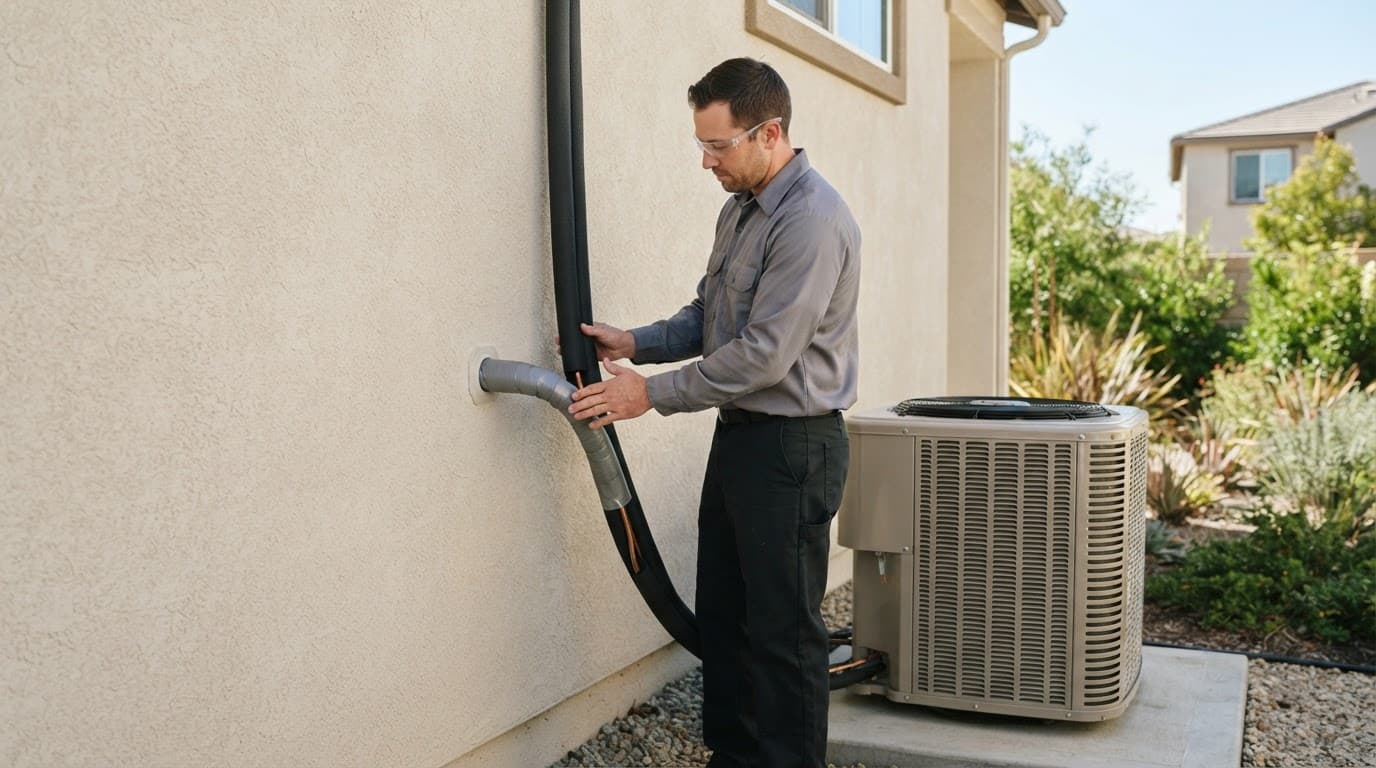
Run the replacement sleeve as close to the wall as access allows. If the opening lacks a line-set cover or wall sleeve, install a purpose-made exterior cover instead of packing rigid material around individual copper pipes. Seal the outer edge of the cover against the wall with exterior-grade, flexible sealant.
Do not open stucco, siding, or drywall to chase hidden insulation, and don’t disturb the compressor unit or its connections. Stop at the visible entry point and schedule service if you find water damage, loose piping, or a gap that extends inside the wall.
When a Professional Should Take Over
Insulation replacement on an intact, exposed sleeve is basic upkeep, but refrigerant diagnosis is not. Federal rules require certified technicians to service equipment containing refrigerant, including the compressor unit; DIY leak products can create larger repair bills.
Call for professional air conditioner repair in Escondido if the suction line freezes or the system blows warm air. Schedule service if insulation stays soaked after replacement, since water damage may have reached the wall or equipment. An HVAC technician can check airflow, drain performance, refrigerant charge, the outdoor unit, compressor unit, and cooling capacity.
A central system often places its evaporator coil above the furnace. A fall heating visit is a good time to inspect the exposed line set and verify its R-value. Regular HVAC care in Escondido can include a heat pump inspection and catch exterior problems before a summer breakdown.
Final Thoughts
Refrigerant line insulation keeps the suction line dry around the outdoor unit (the compressor unit) and supports your air conditioner’s energy efficiency. A close-fitting sleeve of UV-protected pipe insulation is a small repair with a practical payoff.
If you see ice, oil, damaged copper, or recurring moisture, leave the diagnosis to a trained technician. Book Online for help with the parts of the system that insulation cannot fix.
FAQs
Why is my thick suction line sweating?
The thick pipe carries cold refrigerant during the cooling cycle. If its insulation has gaps or tears, warm humid air reaches the cold copper and breaks the vapor barrier, causing water to form. Replace damaged foam and seal every seam.
Do I need to insulate the smaller liquid line?
Usually, no. A standard central air conditioner often leaves the smaller line bare. A mini split, ductless system, or heat pump can have different requirements, so follow the existing manufacturer-approved setup or check the installation manual.
How often should I inspect AC line insulation?
Inspect it at least once each year before heavy cooling weather. In sunny areas such as San Diego County, check again after summer because sun exposure can crack unprotected foam quickly.
What tape works on outdoor seams?
Use weather resistant tape that’s compatible with the sleeve material and rated for outdoor exposure. Products marketed as line set tape are appropriate for sealing exterior seams. Replace collapsed foam instead of trying to tape over it.