

Single-Stage or Two-Stage AC for Coastal San Diego Homes
My Guy is Proud to Be "Your Guy" for Your Home
Ocean air feels great on the patio, but it isn’t kind to an AC condenser. For homeowners near the coast, the choice between a single-stage AC and a two-stage AC affects comfort, noise, humidity, and repair costs more than many sales pitches admit.
In most beach-close homes, two-stage air conditioning provides better indoor comfort through steadier temperatures and improved moisture control. Still, a single-stage AC can be the smarter buy for smaller homes, tighter budgets, or houses that only need short cooling cycles, making it a costeffective cooling option. The local climate makes the difference clear.
Key Takeaways
- A two-stage AC is often the superior choice for coastal homes because it runs longer at a lower output, which provides more consistent humidity control throughout your living space.
- A single-stage AC requires a lower initial investment, but these systems operate in louder, shorter bursts and tend to cycle on and off more frequently.
- Because salt air and high moisture levels impact equipment longevity, proactive coastal maintenance is just as important as the system type you choose.
- The efficiency of your total HVAC system, including your existing ductwork, furnace, and thermostat, significantly influences how well a new unit will perform in your home.
- A professional load calculation is always more reliable than guesswork, particularly when navigating the unique temperature variations across the coastal and inland climates of San Diego County.
Why coastal homes change the AC decision
Coastal weather looks mild on paper. In real life, it puts cooling systems in a tricky spot. Along the coast in Carlsbad, Oceanside, and San Diego, marine air keeps many days moderate, yet high humidity levels make effective dehumidification essential to ensure your house feels as cool as the thermostat suggests.
Move inland to Escondido, Vista, San Marcos, Fallbrook, or Poway, and afternoon heat rises faster. Because these microclimates change so much across short distances, a local HVAC contractor who understands HVAC and plumbing services in North County will usually size equipment more accurately than a one-size-fits-all estimate. While single-stage and two-stage systems are standard, homeowners prioritizing long-term energy efficiency may also consider a variable-speed AC or a variable-capacity system to better manage these fluctuations.
Salt is the other factor homeowners cannot ignore. It settles on the outdoor unit, speeds corrosion, and can shorten the life of coils, screws, and electrical connections. That means the best air conditioning choice is not only about efficiency ratings. It is also about how the system handles longer run times, how often it starts and stops, and how easy it is to maintain near the beach.
Coastal homes also tend to benefit from quieter, steadier cooling. Many owners open windows in the morning, then switch to AC later when the house starts to hold heat. A system that ramps gently often feels better than one that blasts cold air for ten minutes and shuts off. Comfort is not only about hitting 72 degrees; it is about how the home feels between cycles to maintain consistent indoor comfort.
How single-stage and two-stage AC systems compare
A single-stage AC operates with one cooling setting, which is full capacity. When the thermostat calls for cooling, the compressor turns on and runs at 100 percent until the target temperature is reached, at which point it shuts off entirely.
A two-stage AC, often referred to as a multi-speed system, features both a lower and a higher setting. Most of the time, it runs on the lower stage, shifting up only when the outdoor heat load climbs. Because of this design, the system typically cools more gradually and runs for longer durations per cycle.
Here is the practical difference at a glance:
| Feature | Single-stage AC | Two-stage AC |
|---|---|---|
| Cooling output | Full power or off | Low most of the time, high when needed |
| Humidity control | Fair | Better |
| Noise level | More noticeable starts and stops | Usually quieter |
| Comfort | More temperature swings | More even room temperature |
| Upfront cost | Lower investment | Higher investment |
The primary benefit of two-stage equipment is precision control. Longer low-stage cycles pull significantly more moisture from the indoor air and prevent noticeable temperature swings throughout your home. That level of performance is especially helpful near the beach, where high humidity can make a house feel clammy even when it is not particularly hot outside.
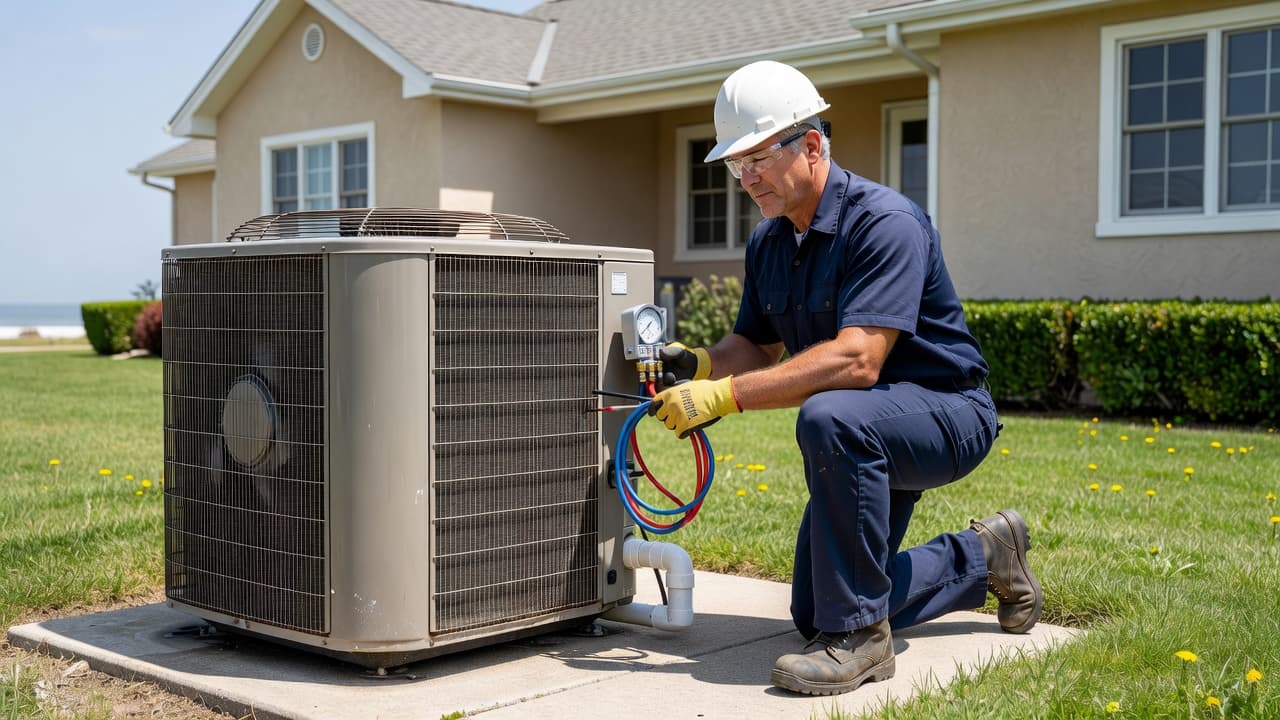
Single-stage systems still have a place in the market. They are simpler, feature a lower upfront cost, and can work well in smaller homes or condos with lighter cooling demands. Still, when homeowners compare single-stage vs two-stage AC for long-term comfort, the two-stage option usually feels more refined and consistent day to day.
Which option makes more sense near the beach
If your home sits within a few miles of the coast, two-stage cooling usually wins on comfort. It handles those long, mild, slightly sticky afternoons better because the lower stage runs longer and removes more moisture. Bedrooms also stay quieter at night, which matters when the outdoor unit is close to a window or patio.
That advantage shows up in older coastal homes, too. Many houses in Carlsbad, Oceanside, and San Diego were not built with perfect insulation or ideal duct layouts. A system that cools in gentler cycles can smooth out hot spots instead of blasting one room cold and leaving another room warm.
Single-stage can still be the right answer in a few cases. A small condo, a shaded home, or a property used only part of the year may not need the added installation cost of two-stage equipment. If the house cools quickly and humidity is not a comfort problem, the simpler system may do the job well enough. Furthermore, when comparing units, check the SEER rating to determine if the efficiency gains justify the price for your specific usage patterns.
Your existing setup matters as much as the condenser outside. Many central systems share airflow components with a gas furnace. If the blower, ducts, or thermostat are outdated, a premium condenser will not fix weak airflow or poor balance. In some cases, a high-efficiency heat pump may serve as a more effective alternative to a traditional HVAC system and furnace setup.
Before you choose, get a load calculation and a duct check from a company that handles local air conditioning installation and maintenance. Sizing matters. An oversized unit, even an expensive one, can lead to short-cycling, which leaves coastal air feeling cool but damp.
Near the coast, skipped maintenance can erase the comfort advantage of either system.
Upfront cost, AC repair, and maintenance reality
Nobody buys a cooling system to admire the condenser, so your total budget matters. A single-stage unit usually requires a lower upfront cost to install, and it features fewer complex controls that can fail. For that reason, some AC repair jobs are simpler and less expensive on this basic equipment.
A two-stage system comes with a higher price tag initially. It may also cost more to diagnose when staging controls, sensors, or communication issues arise. Even so, repair cost is only one piece of the ownership puzzle. A system that starts and stops less often reduces wear from constant cycling, which can translate into long-term savings over the life of the unit. Furthermore, efficient operation keeps your monthly energy bills manageable for your entire HVAC system.
For coastal homeowners, maintenance deserves as much attention as the equipment type. Salt buildup, dirty filters, blocked airflow, and neglected drain lines can drag down performance quickly. That is why a modest system with regular care often outperforms a premium model that gets ignored.
DIY checks before you schedule AC repair
A few simple checks can save you an unnecessary service call.
- Replace or inspect the air filter first. A clogged filter can choke airflow and cause the house to cool unevenly.
- Check the thermostat settings, batteries, and schedule. Sometimes the problem is a faulty program rather than the equipment itself.
- Turn off the power and gently rinse loose salt and dust from the outdoor cabinet with a garden hose. Ensure the compressor area is clear of debris, but avoid using a pressure washer and do not open any electrical panels.
- Make sure plants, patio items, and debris are not crowding the condenser. The unit needs plenty of open space to breathe.
If the system still struggles after those steps, it is time for professional service. Warm air, ice on the lines, water around the indoor unit, or repeated breaker trips are all signs that you need a trained technician to inspect your cooling system.
Final Thoughts
For many coastal homes, a two-stage AC is the better fit because it delivers steadier temperatures, better moisture control, and quieter operation. A single-stage AC still makes sense when budget leads the decision and the home has modest cooling demands.
The smartest choice comes from professional sizing, an honest inspection of your thermostat settings, and a clear look at your existing ductwork and furnace. If you want to compare options based on how your house actually performs, Book Online before the next hot, humid stretch hits.
FAQs
Is a two-stage AC worth it in Carlsbad or Oceanside?
Often, yes. Coastal homes in Carlsbad and Oceanside usually benefit from longer, lower-output cooling cycles because those cycles improve comfort and humidity control. If your home feels sticky, noisy, or unevenly cooled, a two-stage AC is often worth the added cost.
Does two-stage air conditioning lower electric bills?
It can, but comfort is the primary benefit for many homeowners. Because a two-stage system runs at lower output much of the time, it may optimize energy efficiency compared to a single-stage unit, which can lead to lower energy bills when the system is properly sized and maintained.
Can I replace the A/C and keep my current furnace?
Sometimes. If the furnace blower, controls, and ductwork still match the new cooling equipment, keeping the existing furnace may be fine. If the blower is undersized or the furnace is near the end of its life, replacing both can make more sense.
How often should coastal HVAC systems be serviced?
At least once a year is the minimum, and twice a year is better for many homes near the water. Coastal systems deal with salt, moisture, and corrosion, so regular cleaning and inspection help catch problems early, which prevents costly compressor repairs and other major air conditioning or heating issues.